RDBG #13 – Spellrune: Realm of Portals

Spellrune is a Slay the Spire clone. I use that term for the sake of brevity rather than to be derogatory – people used to call first-person shooters ‘Doom clones’, after all – but that description immediately lets us understand what we’re dealing with, and avoids a lot of unnecessary repetition from my coverage of that earlier game. Released by Microlith Games through Steam Early Access on September 21st, 2018, it never made it to a version 1.0. That makes this the first unfinished game we’re covering. There may be some reasons for that.

Premise and Gameplay

Choose a character, move room to room, fight some enemies, fight some elites champions to gain relics artifacts, then take down a boss at the end of the floor. You know how this works. I promise you I’m not being lazy in my description. The screenshots, never mind video footage if you can find what little is out there, speak for themselves.

There is a degree of customisability to your class. Not only can you change your appearance (somewhat bafflingly using a slider interface for a predefined set of options that are not on any sort of spectrum), but you can mix and match the type of magic you specialise in. You can pick from one of three types of offensive cards (Arcane, Fire, and Frost), and three types of defensive cards (Holy, Nature, and Shadow), for a total of nine possible combinations. I went for an Arcane/Holy build. I can’t tell you anything firsthand about the other potential builds because… I only ever played one run.
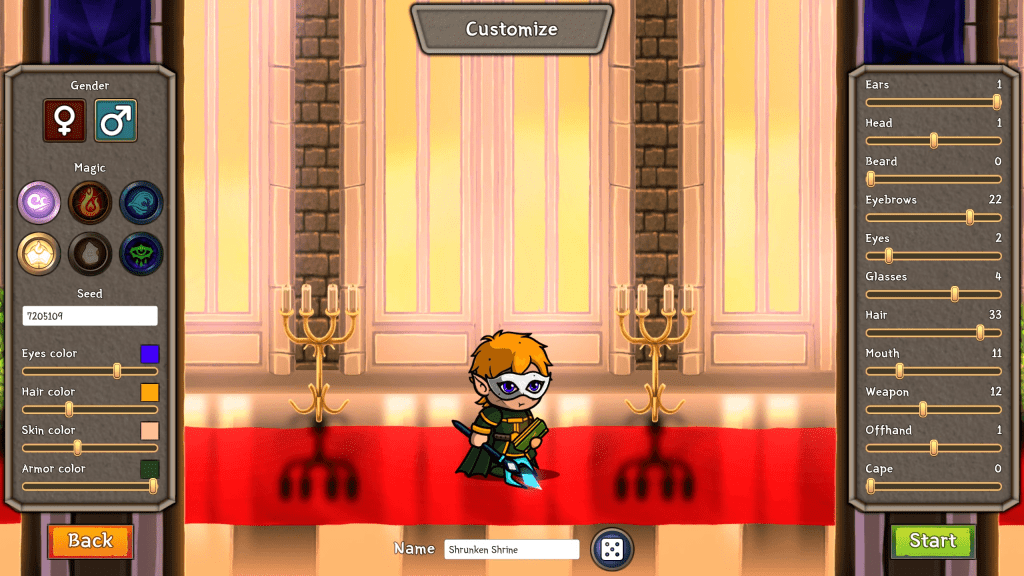
Yeah, I’ll have, uhhh… a Hair 33 and a Glasses 4, please.

Imagine my shock when I got to the end of the third floor expecting to take on a final boss and it turned out that there was another ‘act’ full of rooms waiting for me. I may never know how certain of a feature this is, but it seems to function as an ‘endless’ mode by default. Just keep going until you die, which I never could. Through a combination of the sheer number of damage multiplying cards and enemy-nerfing artifacts I’d picked up, nothing could touch me. I got to the end of the sixth floor and ninetieth-odd room before tapping out – not due to difficulty, but because I couldn’t play for longer than two hours before forfeiting my right to a Steam refund. I’m sorry, but this is a hobby.

Another couple of quirks: health isn’t automatically recovered between rooms, which didn’t do anything to counteract my broken build. Rest spots allow you to recover, upgrade cards, or look for treasure, which can net you an extra potion or card, much like winning an encounter. Some of my Holy cards allowed me to directly heal health as well as block damage outright, but this is completely redundant. You have a hard set maximum HP limit, but there is never a limit to how much block you can put up (except for the fact you lose block after each turn). I can’t see any benefit to the risk of filling your deck with potentially unusable healing cards instead of defending cards, which you can always ignore until necessary. 

Room 3, fight 2 – the first and only time the run put me in any actual danger of losing.

Randomised Elements

Oh, it’s random, alright. Let me give you a bit of an overview of the highlights of the only run I had with Spellrune. The second fight put me up against four enemies at once, all of whom were very happy to debuff, block, and attack in fairly equal measure. This almost ended in death right out the gate despite playing what I felt to be the best possible cards in my hand from a fairly limited starting deck every turn.

The boon-granting artifacts dramatically turned my fortunes, however. I fought two champions back to back. My first reward automatically slapped all future enemies with a ‘freeze’ status for the first two rounds of combat, preventing them from taking any actions whatsoever. My second reward did the same thing, but for three rounds of combat instead of two. Now, get this – they stacked. Every single fight from then on started with a free five uninterrupted rounds to do whatever I pleased without the enemy having any chance for reprisal. Even if the game could end, I had already won – fewer than 10 rooms in.
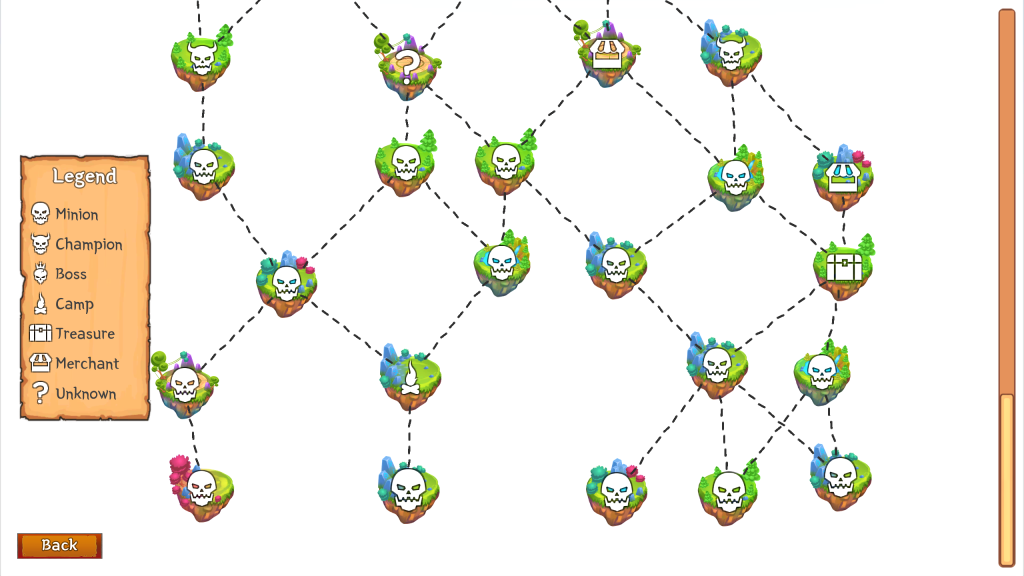
Sometimes the map screen would have background art. Often it… wouldn’t.

This got me thinking. While I was certainly steamrolling the game having done almost nothing of tactical merit to deserve it, this was a very different form of engagement than I was used to from the genre. The fun of these games usually comes from overcoming gradually mounting challenges, fine-tuning your deck to draw more optimal hands. That said, I cannot deny that I was, for about 15 minutes, having a lot of fun I don’t normally see in this subgenre that strives for challenge. I would enter a room, immediately crush the enemy without them taking a single turn, then do it again and again. I was making money faster than I could spend it all buying every available artifact at every shop I came across. Inevitably, this became boring – but it’s a type of forbidden, beta-testing enjoyment that game designers usually try very hard to prevent you from encountering. Outside of tutorials or opening levels, this type of thing usually lays the game’s mechanics a little too bare or makes the gameplay seem too shallow. I can only judge Spellrune on what is currently available, but I think this type of experience would have been among the first things they’d have tried to eliminate. Well, besides the bugs. The game kept softlocking itself at victory reward screens. This is arguably the worst possible place to have your game stop functioning because it kills the player’s desire to continue stone dead – they have to redo the whole fight. That may have been more of an issue had any of the fights lasted longer than one turn, but you see what I’m getting at, hopefully.
This image has an empty alt attribute; its file name is image-13.png
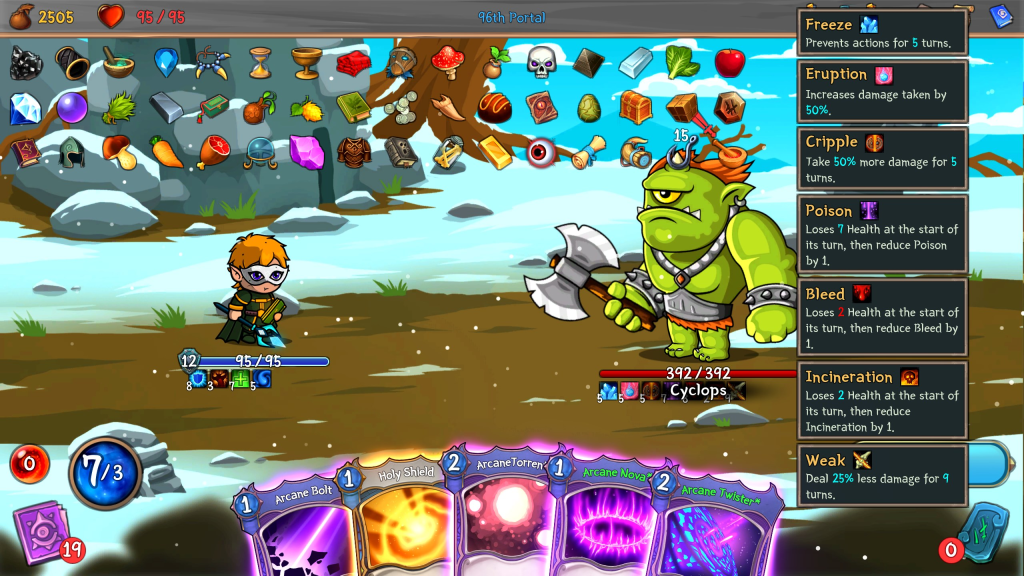
Here in the 96th room, it looks like a lot is going on, but all it really means is that I can’t be touched, let alone lose.

After I’d picked up my 48th (forty-eighth!) artifact, the game stopped adding them to my collection, although it was happy for me to waste money by trying to buy more in shops. That was where I gave up. Now that adding cards was pointless, the reward system was stuck in a loop where the only thing it could give me was more money, yet the only things I could buy with it were no longer usable. All reasons to persevere were gone.

I guess when you’re rolling in this much money, it’s more of a charity donation.

Presentation

I must stress, the game isn’t finished, so it’s fair to think that had the developers had more time and the game was completed, we wouldn’t have issues like the game randomly softlocking after winning fights, or that telltale tangible Unity chug every time the enemy passes turn to you. The stage selection map has no background whatsoever, which is very jarring. Every time you complete a room, your character steps through a portal to the next stage, which takes several seconds and cannot be skipped. All this aside, there’s a nice Monster Slayers-esque design sensibility to the enemies; positively Newgroundish in their colouring and simple bobbing animations. The music is serviceable. The sound effects are fine. The problem with such faint praise is that it seems all the more damning after such a laundry list of criticisms, but given its strong similarity to certain other games, a unique presentation would have really gone a long way to keeping the game memorable, even if it never got completed.
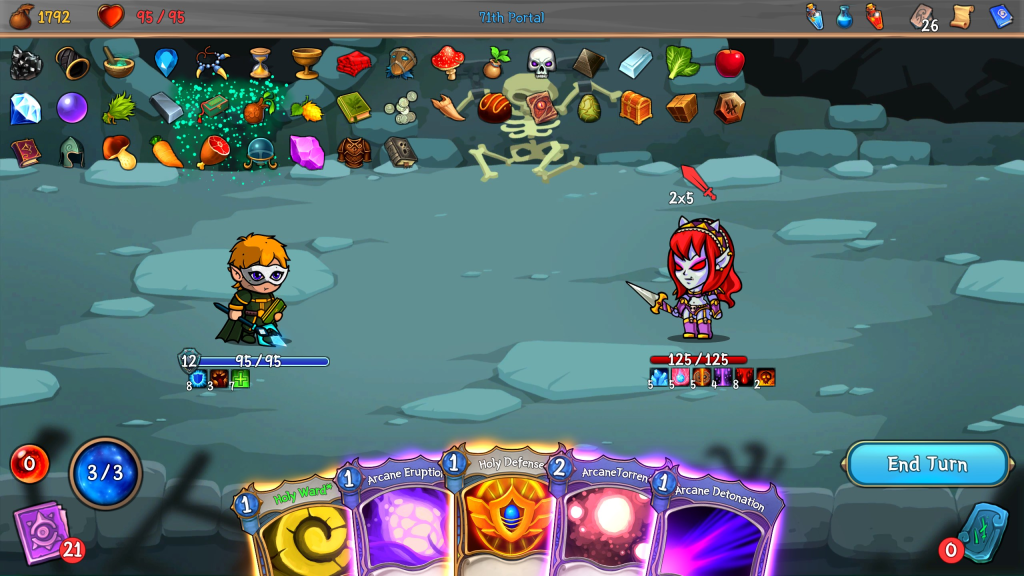
The relic icons are pretty and clear, though they do draw my eye to the oddly stretched background skeleton. Also: 71th Portal.

Closing Remarks

Unfortunately, I cannot think of a reason (other than this very project) to play Spellrune in 2024. I never want to believe a developer is acting in bad faith, because I cannot imagine that even a rushed, heavily derivative game is worth the time, energy, or lost goodwill from customers just because a certain genre is currently in vogue. These days, Microlith Games’ website redirects to something completely unrelated. I hope one day I’ll have a chance to contact them about what exactly the goal was and what happened. On the other hand, I can confidently say that this is the first and only game I’ve covered here that I never won or lost a run on!

Standout Cards
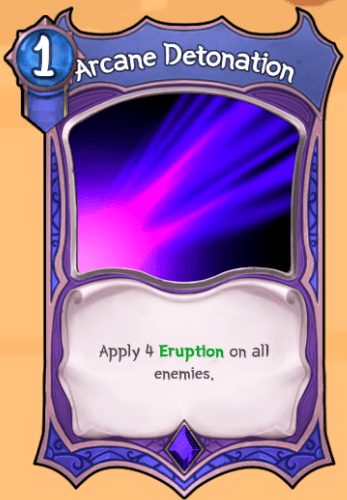
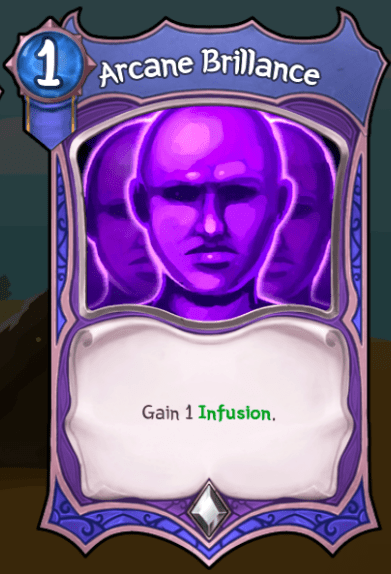
Each stack of Eruption adds an additional 10% damage when enemies are attacked. Broken.
It says something when I was struggling to come up with 3 cards that felt noteworthy. I really like this one’s art. Moai vibes.
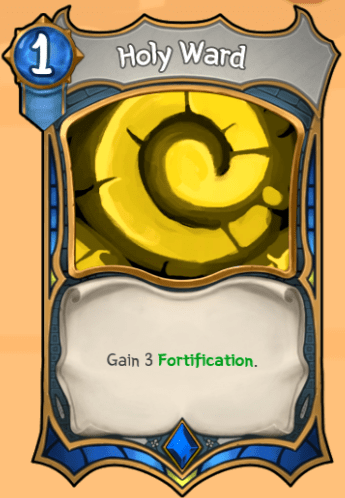
Fortification gives you +4 Defense (think built-in block) at the end of your turn, but then loses a stack. Never ended up needing it, but sounds incredibly strong.

RDBG #12 – Insane Robots

I respect a game with a name that doesn’t give anything away. Insane Robots could be anything from a Platinum-style action brawler to an idle Cookie Clicker-alike. Yet here it is, a roguelike deck-builder with tactics elements, released on July 12th, 2018 by UK developers Playniac.

Premise and Gameplay

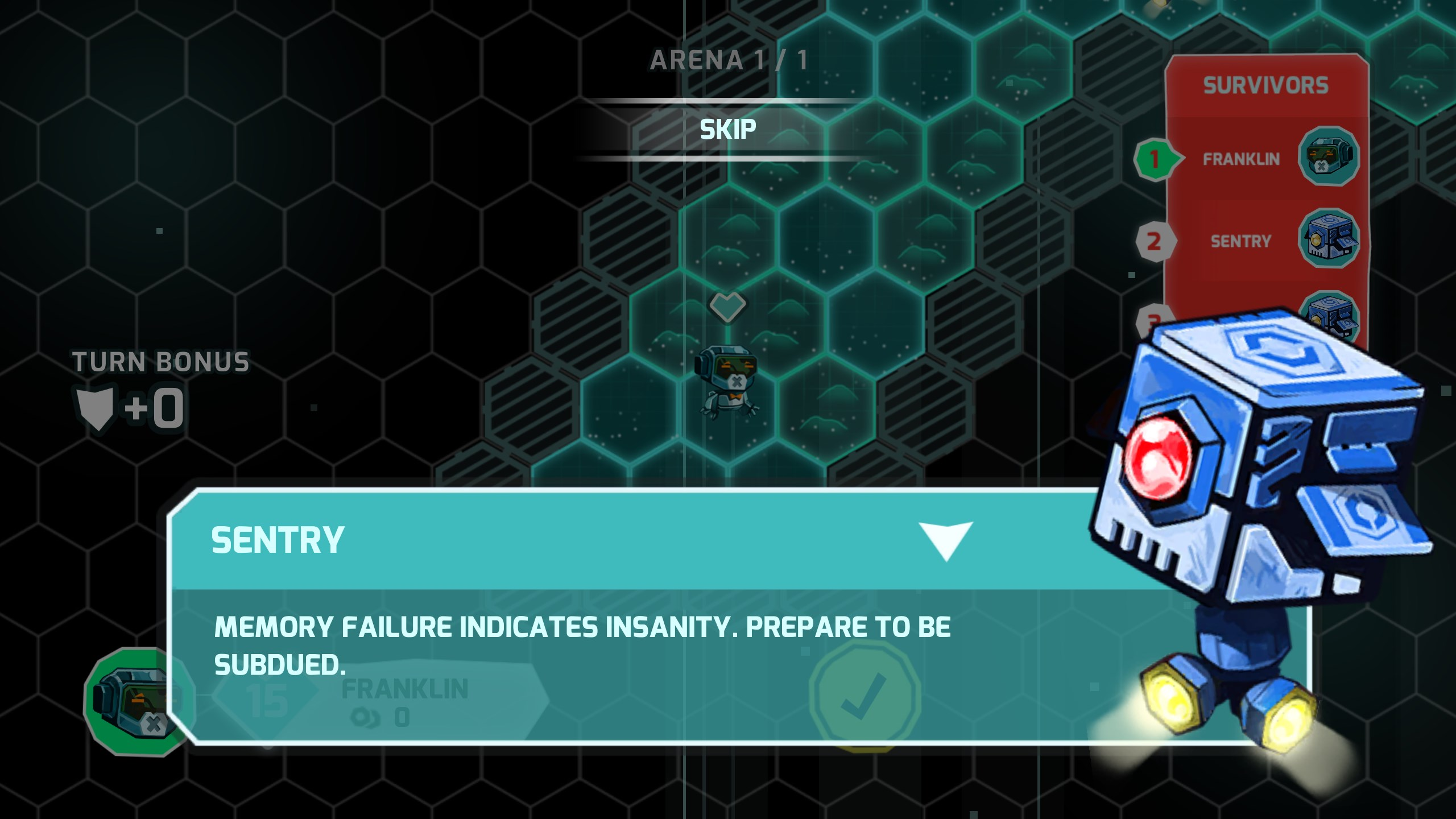
You are Franklin (or one of many unlockable alternatives), a robot with memory malfunctions that has begun asking questions, and robots shouldn’t be doing that. This qualifies as insanity, and insane robots are not considered able to aid humanity. Therefore, you have been ‘selected for volunteering’ into the Arenas, where you do battle for survival against other alleged defectives, because entertainment is now all you are fit for. 

The Arenas themselves are hex-based, which feels a bit like Game Boy Wars, if you’re familiar. (The strategy gamers among you probably have a better comparison.) You and other combatants take turns moving around, picking up goodies, entering shops, or encountering random scenarios that may improve your odds in combat. These maps have features such as terrain bonuses or fogs of war that obscure opponents and obtainables.

You can see the hex-grid map that you move around in the background.

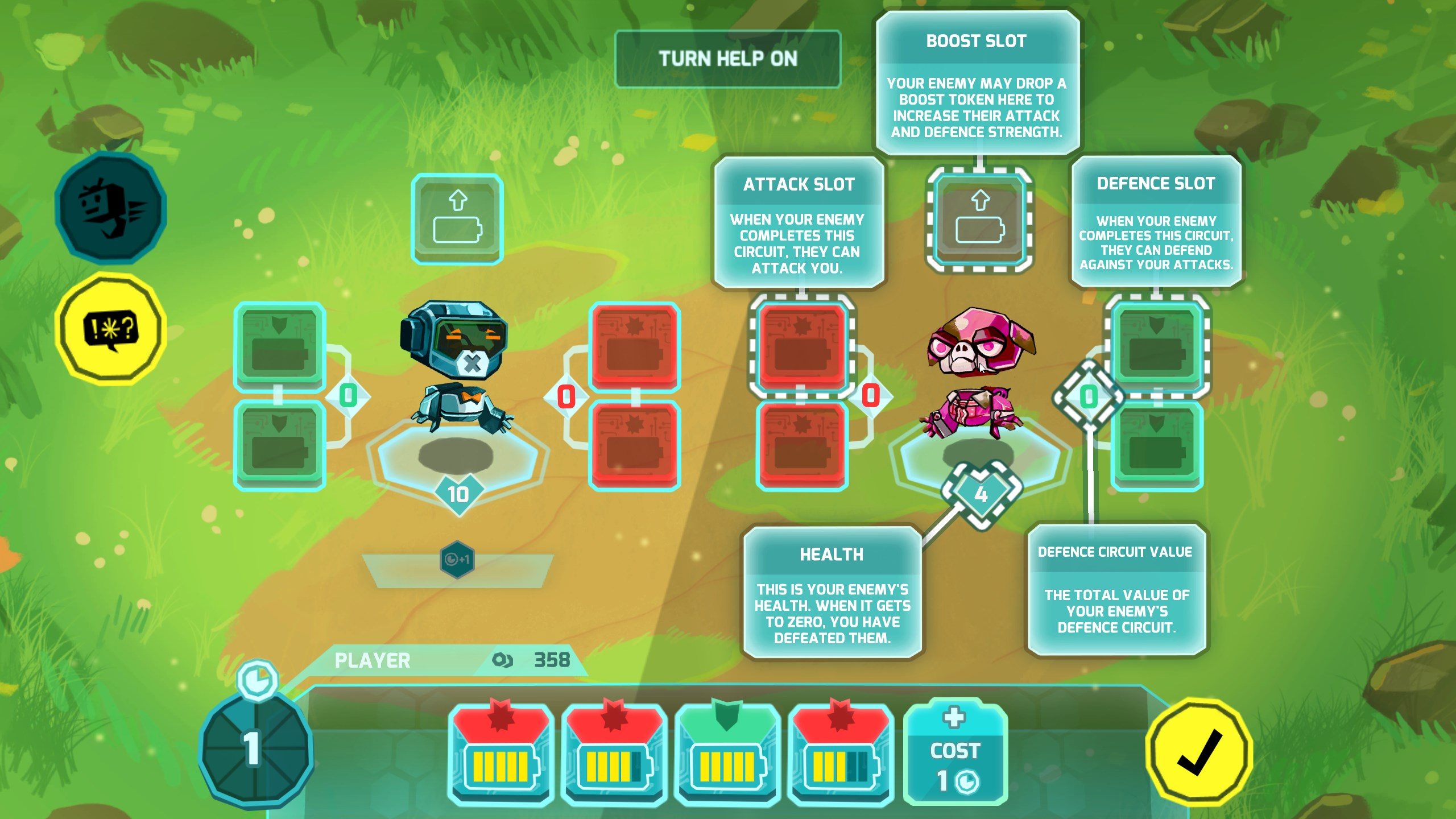
Once you actually run into another robot, battle is joined. At first, it’s business as usual: draw chips (our ‘cards’ in this case) from your deck and use your limited energy to play them. Then it gets wacky. This is a little hard to convey in writing, but you and your opponent have limited slots called ‘circuits’ that you can fit chips into: two for attacking, two for defending, and one for added boosts. The twist: you can’t just, say, drop a chip for blocking three damage into a slot and immediately be protected from the next three points of incoming damage. No, the circuits must be completed – both slots must be filled. For example, put a chip that blocks two points of damage in defence slot one and another that blocks four points of damage in defence slot two and you’re ready to block a total of six incoming damage, but neither one will do anything by themselves.

Once you’ve wrapped your head around that, the madness (insanity, one dares, even) begins proper when you start getting chips that swap the defense or attacking values of player’s respective slots, or randomise them entirely, or lock them off from being interfered with by the opponent, amongst other effects. Because both sides can usually see what’s going on in their opponent’s slots, you are always trying to think a move ahead of one another: are they going to complete that scarily large attack circuit they’re building, or should you just wallop them while they have empty defense slots?

A handy guide that tells you what all the icons you’re looking at do. Can be turned on and off.

Randomised Elements

The interesting thing to take into account is that the CPU opponents have more or less the same ‘cards’ as you, but they also have to move around the hex maps to fight you in the first place. They may not always go straight for you either: it’s quite satisfying to see two CPU enemies go after and whittle one another down while you hide in the shadows ready to ambush the survivor. However, if you’re trying to get the highest score possible (you are rewarded 1-3 stars upon completing an Arena tournament), then it’s in your best interests to be proactive in going after enemies first. HP isn’t restored between fights, so you’ve got to be careful. The amount of money you have left over at the end of each also affects your star grading. This actually discourages spending money on upgrading your ‘bot, forcing you to try to make do with what you start off with. However, this also means you’re partly at the mercy of whatever random paths they decide to move around in on the map. I’ve had more than one tournament where it’s just me and one enemy left and they’ve given me the runaround, spending several turns chasing them around the map until I can reach and fight them.

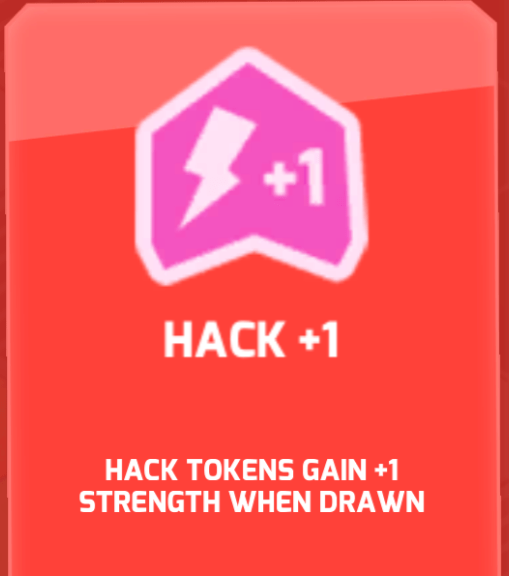
The types of chips that you draw into your hand each round are random, and the only way to actually manipulate what types you get is to buy robot upgrades (called ‘augments’) that alter the probability of certain types being drawn more often. In this sense, you deck-influence more than deck-build. These augments confer all manner of boons inside and outside of combat, like increasing the likelihood of drawing chips that interfere with your opponent, or raising the number of hexes you can move around the maps. Certain robots come with certain augments right out of the gate, so it’s a case of finding a playstyle you enjoy more than overcoming the unique challenges offered by different character classes. It’s an enjoyable bit of trial-and-error.

‘Overkill’ kicks in when you deal damage to an enemy beyond zero health. You get 100 coins for each further point reduced. More coins = higher ranks.

The only real problem I have with IR is that there is too much push-and-pull in most combat encounters. By that, I mean that the sense that you are winning or losing is switched up on you many, many times before a result is secured, and often simply because of literal luck of the draw. In moderation, this is typically welcome: what would games be without feeling like you’d overcome a challenge or absolutely crushed an enemy thanks to good planning and execution? Unfortunately, this gets exhausting when you’ve been in the same battle for ten minutes and both sides have turned the tables on one another again and again. This gets a bit more dispiriting when you finally win a real knock-down-drag-out fight but have so little health remaining that you are forced to find a repair shop and heal (which will come at the cost of a higher grade/score for this tournament – remember, you’re trying to spend as little money as possible) to reduce the likelihood of getting wiped out in your next battle. I’m willing to concede this could just be a ‘me’ thing though – this genre is nothing if not spoiled for variety in combat pacing, so you may welcome a slower one more than I personally do. The upshot is that the more time spent resulted in a greater sense of achievement when I finally overcame a particularly challenging tournament by the skin of my teeth. Local and online two-player options are included. I couldn’t get the online working, but I imagine having someone else playing to laugh and argue with would go a long way to mitigating the drain of a long combat encounter.

Is it even really a roguelike deck-builder if it doesn’t have these random scenario tiles?

Presentation

The character designs are sweet without being twee, and have a certain bobblehead charm to the way they sway back and forth while attacking or getting attacked. They also have very nice robotic text-to-speech style voice clips when attacking that remind me of the Radiohead song ‘Fitter Happier’. Maps are easy to interpret at all times, and the UI is clean and easy to parse. Little about how the game looks is likely to blow your mind, but it will also never get in the way of your decision-making, which should never be taken for granted.

Special credit to the music, which veers between atmospheric ambient pieces and more appropriately exciting up-tempo stuff when fights kick off. Most of all, I was surprised at how much of it there actually was before I noticed anything repeated across levels, and even then – importantly – very little of it got on my nerves after several loops. In particular, the title screen music is a treat for me as a surf-rock fan.

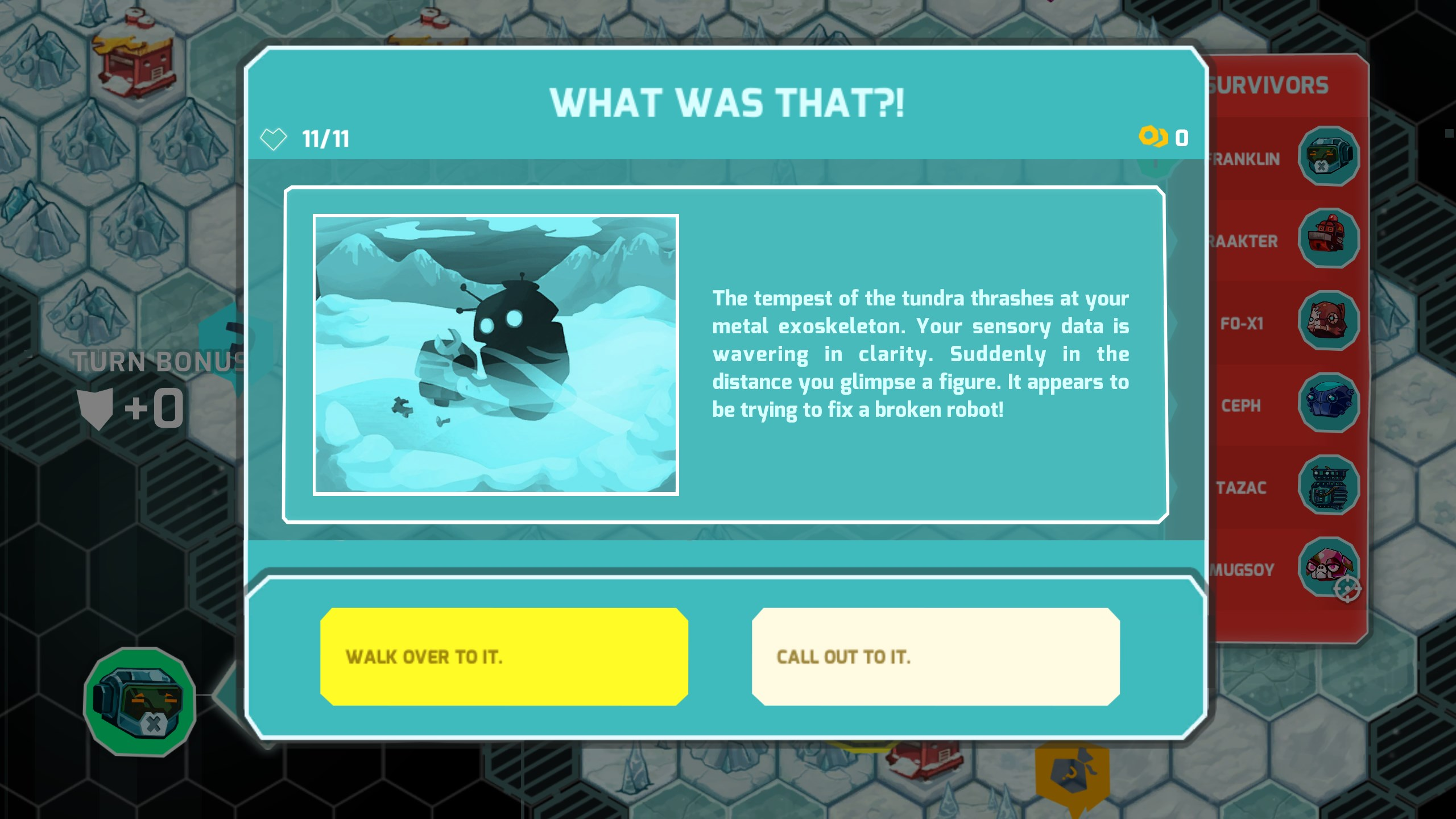
These little pre-tournament cutscenes are a nice use of the drawn assets.

Closing Remarks

The store page boasts a 15+ hour campaign and I’m sure there’s a lot more to it than that if it gets its hooks in. It certainly reminded me of Advance Wars more than once, and those are fond memories indeed. The back-and-forth of every battle may get wearing or may actually be right up your alley, especially in two-player. Insane Robots is a great example of how surprisingly versatile even just the basic mechanics of the roguelike deck-builder are for a wide variety of genre fusions and story settings.

Standout Augments

Because every robot has the same chips/cards at their disposal, I’m going to use this space to focus on enhancement to the robots themselves that can affect their decks.

Extra grid movement may be a bit dull but makes all the difference. Chase and kill things faster. Run from things faster. Win faster.
Probably speaks more to my own personal playstyle than anything else, but what better way to mess with people than to randomly alter the values of their chips to their detriment?
Of course, it’s no fun when they do it to YOU, so nip that in the bud by locking your chips and preventing interference.

Coin Crypt 10th Anniversary Developer Interview with Greg Lobanov

Coin Crypt, which was the first entry in my Roguelike Deck-building Game chronology, turns 10 years old today. I’m delighted to present an interview I had with its developer, Greg Lobanov (Chicory: A Colorful Tale, Wandersong) on November 9th. I’m no natural-born interviewer, but Greg gave insightful answers, and I’m proud that how meaningful this was to both of us comes across as strongly as it does.

Discard Pile #1: One Deck Dungeon (2018)

Released on Steam early access on February 28th, 2018 by Handelabra Games, I was on the fence about One Deck Dungeon for some time before coming to the conclusion that it doesn’t actually meet my criteria for the full-entry treatment here. It’s close, though, and is fully worth checking out if what I’m about to describe sounds like something you may enjoy.

You choose a character class and enter a dungeon with several paths, which in turn feature several rooms. Most actions you take cause a turn timer to tick down, and you want to explore as much of the current dungeon floor as possible before the timer runs out and you’re forced down to the next floor. Survive as many encounters and traps as you can, accumulate XP, items and skills along the way, and move on until the run ends. 

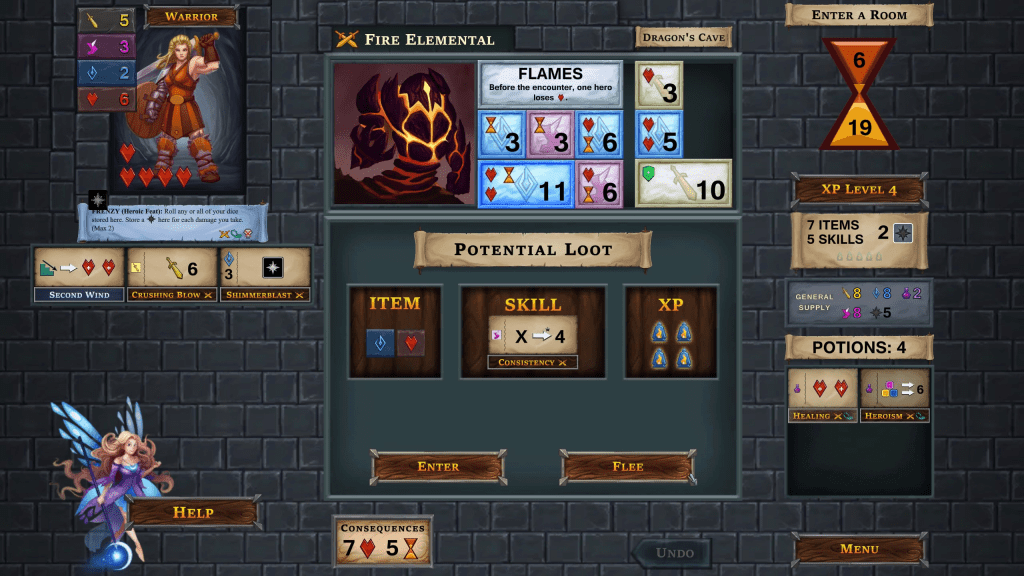
Combat and traps are a little hard to explain without some hands-on experience, but here goes. You roll several six-sided dice of various types, corresponding to different attributes of your character: strength, dexterity, magic. The class you chose at the start will affect how many of each type of dice you have. Let’s say you chose a mage and you’ve run into a skeleton. You can easily bypass its block because you’re likely to have rolled many magic-type dice, but you’re less likely to be able to stop it wasting your time or hitting you because you have fewer dexterity and strength-type dice at your disposal. Ultimately, it becomes a game of resource management and deciding when it’s best to use potions, special abilities, or even just taking damage – if you can survive even one round against most enemies and traps, you automatically win and can just move on. 

Our Warrior can roll 5 yellow strength dice, 3 dexterity dice, and 1 magic dice. These can then be placed on the Bandit’s attacks in an effort to reduce as much incoming damage or wasted time as possible.

Why isn’t it getting the esteemed accolade of being the twelfth ‘real’ chronological entry in this project, then? Simply put, despite the name, there isn’t enough deck-building, guv. I don’t mean in the strict sense that the game must feature literal cards to be a roguelike deck-builder – it actually refers to most of its on-screen elements as ‘cards’. I’m talking about the player having a rotatable, semi-random loadout of skills that comprise the core of engagement with the game. Even Solitairica compelled you to use its solitaire interface as a medium to constantly trigger complementary deck-like special abilities in order to offset your opponent’s abilities or damage them directly. In ODD, you can pick up a limited number of skills that affect your rolls, number of dice, health, and such, but these are more akin to potions in Slay the Spire, or triggerable D&D class features that are on cooldowns. They are very much a secondary method of negotiating challenges or mitigating risk – your primary tools are always the dice rolls and how you choose to parcel them out against the challenge’s numbers.

If you’ve played this game, you may disagree with my call here, and I’d love to hear why. My choice to omit it is not a judgement of its quality. ODD is great fun and has a ton on offer. Not only are there six character classes, there are a further TEN available as DLC if its infectious, Dicey Dungeonsesque gameplay loop gets its hooks into you. Most unique is the ability to take two characters of different classes into the dungeon at the same time and try to compensate for the need to split your rewards with the benefits brought by having more diverse dice types at your disposal. There’s no shortage of clever stuff going on here.

Skills do exist, but you’re not going to be doing much deck-building with them. It’s more about engineering scenarios to get the dice you need when you need them.

…After all that, I realised that it is actually based on a physical game of the same name that was released in 2016… which disqualifies it from consideration here entirely, as I’m only considering games that were originally conceived as video games. The name suddenly makes a lot more sense, though!