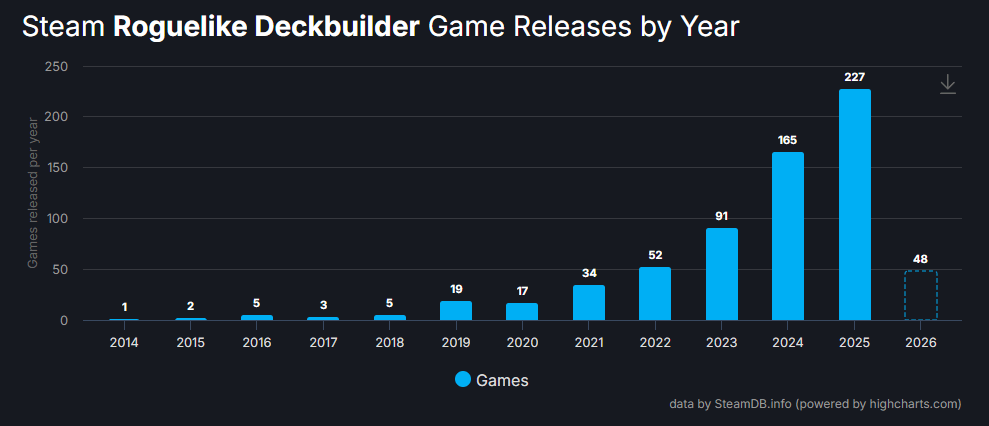
This is the number of games released on Steam with the tag ‘Roguelike Deckbuilder’ by year. When I started the Roguelike Deck-Building Games – A Chronological Exploration project, my original intention was that I’d probably play one game over one week and have a blog post covering it the week after, and continue alternating in that way. As 2023 went on, I realised that the rate of games released in this subgenre would handily outpace that – but in a pre-Balatro world, I couldn’t even begin to guess by just how much. Regardless, this is just the stuff I can track by Steam release. If I don’t factor in things that only have, say, an itch.io release, or a mobile-only release in a foreign country which may no longer be playable, could I even be said to be properly keeping track of everything chronologically?
Back when I finally got to Slay the Spire’s ‘turn’ in the blog, it occurred to me that a time would soon come when the majority of the games I would be playing would begin and end with StS as the entirety of what they wanted their game to be. The more celebrated games in this space build on what StS and its progenitors did as a backbone for a wider variety of mechanics or ideas from unrelated genres entirely (Dicey Dungeons, Inscryption, and Cobalt Core leap to mind… a further dozen names are getting their shoes on). Would there still be a purpose (never mind any interest) for an in-order chronology when the primary influence would be increasingly apparent for the majority of entries? I’m no longer certain. I’m extremely excited for StS2, but if I thought covering all of these games was hard to manage in the wake of the success of the first game, it will likely become impossible when a new glut on a scale hitherto unseen follows the sequel.
Rather than even try and fail to keep up, here’s how I’m moving the goalposts:
1. The articles I wrote about games released beforeSlay the Spire came out will stay up, but I’m retroactively changing their tag to ‘Before the Spire’. I still plan to reach out to the devs for interviews for the remaining 8 or so games, and maybe beyond.
2. The articles I wrote about games afterSlay the Spire came out will also stay up, and I’ll tag those ‘Beyond the Spire’. If you turn them while reheating, they’re still perfectly good posts. And who knows, perhaps this way, I’ll get to talk about Monster Train within my lifetime.
I’ve gotten a (slightly) better handle of myself over the last several years and, arbitrary as it may seem, it’s important for me, mentally, to draw a line under the chronological format and move on, lest the feeling of being overwhelmed stop me from ever putting a dent in the topic again – especially when I think it’s something that can no longer be caught up on for one person with a fulltime job that isn’t… doing this! I apologise to anyone who was interested in seeing this unfold further chronologically, but I’m choosing to see this optimistically as a worthwhile experiment while it lasted. Without ‘having to do the next game’, I’m now better able to post about the standouts and obscurities in this no-longer-so-little niche I love. Most importantly, I can play StS2 the moment it drops on Friday morning until my eyes completely dry out and turn to dust… guiltfree!
It’s been a while! Not that I went anywhere. No life-got-in-the-way spiel. I mean, it didn’t, at least not to any extent that prevented posts or videos being made had I tried. In terms of games, I just wandered back over to RPGs after lots of deckbuilding – it happens! The Shrunken Shrine project is, at best, one of passion, and when I fall off the horse, I have to trust I will get back on sooner or later. This is relatively niche stuff, after all. Importantly, I’ve apparently finally overcome the version of myself that would have felt such shame about ‘my old stuff’ a year or so down the line and then scrubbing the evidence. I’m chalking that up as a minor victory.
What have I been doing, then? Mostly, experimenting with unexciting but important life-structure factors that I’ve struggled with for years. Things like a sustainable gym routine that works with my hypermobility and maintaining motivation in a job where that often has to be self-directed. They call it mindfulness, but I think of it as checking in on myself that I’m not constantly on autopilot. It’s a work in progress, as is life.
A dream was fulfilled earlier this month. I’ve been playing bass on-and-off for a long time, but never to the extent that I was comfortable identifying myself as a bassist. I was invited by a coworker to accompany several guitarists for a song for a local festival. It’s as low as these kinds of stakes get, but I’m trying to get away from minimising myself. For years, playing on a stage was something I’d both daydreamed about and imagined I’d fall to pieces actually doing. I practiced well, the performance was well-received, and it was fun. Would do again!
To supervise such efforts, here’s something I just ordered for myself. It’s a figure of Kasuga Ichiban, one of my favourite characters ever. Without spoiling anything beyond the opening set-up of the game he’s from, he’s a yakuza goon who willingly takes the rap for a murder he didn’t commit. He’s released 18 years later, at 42 years of age, to a society and criminal underworld that hasn’t so much forgotten him but simply rejects him as someone for which they no longer have a need or place. In his efforts to find his own, what really stuck with me were the moments of mundane struggle and how he faced them. The frustration of going to the job center. Studying at vocational school in middle age. Feeling tangibly out of touch. Even when the world stacks the deck, Ichiban faces everything with a naive yet inspiring sincerity that could make an opsimath out of anyone, given the chance.
Also, he really bloody likes Dragon Quest, so you know he’s good people. See you next year!
The second year of the site. There’s been fewer posts this year (11) than there were in the first (15), but I haven’t fallen off completely or deleted everything in a fit of unsatisfied despondency, which means a lot on a personal level. I’ve been playing other genres and pursuing other interests outside of the blog and games. 2024 was an awful year for the games industry, with massive redundancies and shutdowns for developers and journalists alike. It seemed like a good year to get back into books, film, music, all the other things I enjoy. Most relevantly to this blog, I think I’ve finally been bitten by the physical TCG bug. A minor childhood dream was realised earlier in the month when I completed a little binder of Pokemon cards from a recently-printed set of the original 151 monsters. This in tandem with running a little lunchtime club for students of mine with several starter decks has given me a taste for physical cardboard, so to speak. This is a slippery slope that either ends in bankruptcy or finally getting into Magic aproper. Either way, there’s a lot of games to get around to before that.
A new project was started in the form of the Playdate Season One reviews. At a lower word count than the RDBG posts, they’ve made for a nice little palate cleanser between the card games, as well as something that has a much smaller and more achievable end goal. No promises, but I’ll endeavour to finish that up before this time next year. I’m actually using a Playdate game called Pomo Post as a little timeboxing tool while I’m writing up this very post, funnily enough!
Last year, I mentioned I was using social media less. Another year on, I now barely use it at all for posting. About 10 years ago, I used to run a Facebook page with friends that, at one point, had more than 10,000 followers. Then Facebook kneecapped unpaid reach and it withered overnight. Since then, I only use it as a matter of course for contacting small businesses – a far cry from the place where I made some of the closest online friends of my life. Instagram is the one that feels most transparently like a Skinner box for someone like me who doesn’t use TikTok. I do enjoy a good inscrutable reel pull, but only in the same way you can’t just eat one jelly baby. It’s rare to come across something that goes beyond a quick laugh or isn’t bait for an established interest it knows I have from data scraping. Cohost, one of the original post-Elmo Twitter contenders, just went read-only. I will give Bluesky a go starting today, as I’ve been hearing the name crop up more and more from podcasts and people I follow. I just want the Twitter experience with less culture warfare, though I do appreciate that’s a lot to ask in an election year.
I don’t mind sharing that I actually have no upcoming plans for a third Shrine Offering video. They’re quite time-consuming to script up, and I’ll only make them when I have an interesting unifying theme for the pieces of media they cover. These are certainly to be the least regular of my already quite irregular output – once in a blue moon, only when I really feel I have something to say.
So, the coming year? More interviews, more roguelike deck-builders, and possibly even more mention of media outside of those. I’ve found it increasingly easy to delay updating my usual ‘annual media’ threads on Twitter, given that at least 75% of my followers are bots, so I may just make that a seasonal thing in long-form posts here. We’ll see. Happy Halloween to one and all!
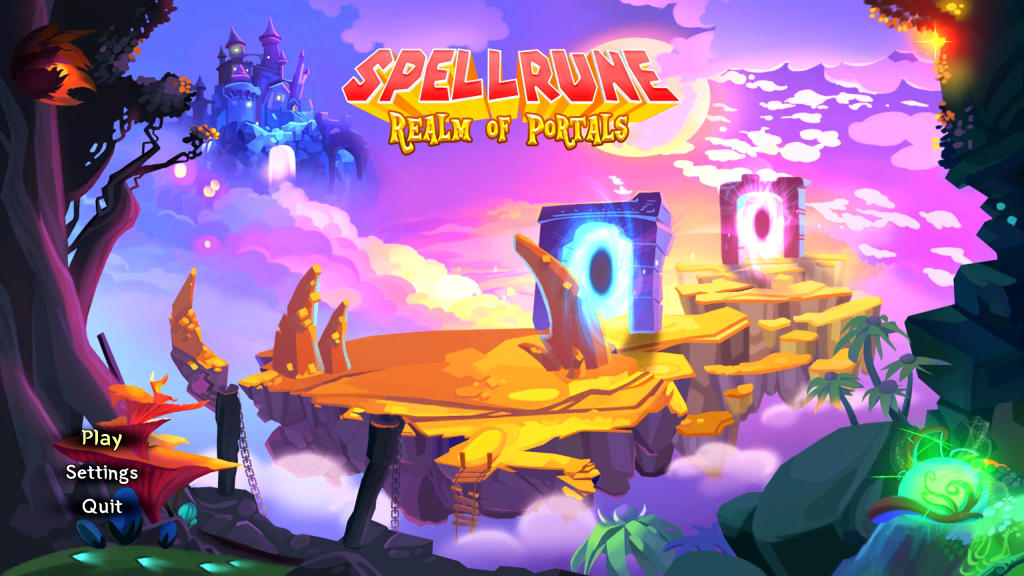
Spellrune is a Slay the Spire clone. I use that term for the sake of brevity rather than to be derogatory – people used to call first-person shooters ‘Doom clones’, after all – but that description immediately lets us understand what we’re dealing with, and avoids a lot of unnecessary repetition from my coverage of that earlier game. Released by Microlith Games through Steam Early Access on September 21st, 2018, it never made it to a version 1.0. That makes this the first unfinished game we’re covering. There may be some reasons for that.
Premise and Gameplay
Choose a character, move room to room, fight some enemies, fight some elites champions to gain relics artifacts, then take down a boss at the end of the floor. You know how this works. I promise you I’m not being lazy in my description. The screenshots, never mind video footage if you can find what little is out there, speak for themselves.
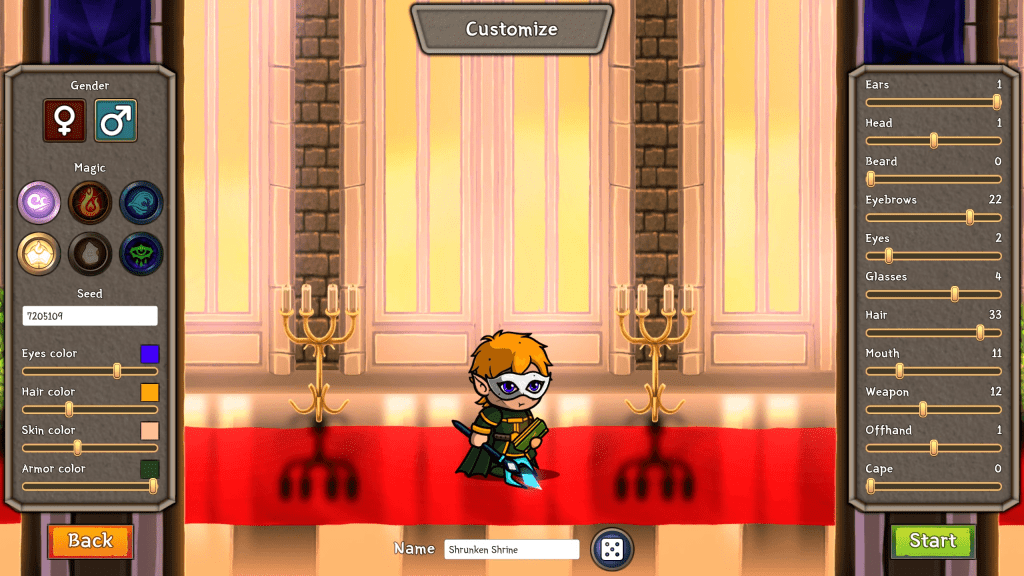
There is a degree of customisability to your class. Not only can you change your appearance (somewhat bafflingly using a slider interface for a predefined set of options that are not on any sort of spectrum), but you can mix and match the type of magic you specialise in. You can pick from one of three types of offensive cards (Arcane, Fire, and Frost), and three types of defensive cards (Holy, Nature, and Shadow), for a total of nine possible combinations. I went for an Arcane/Holy build. I can’t tell you anything firsthand about the other potential builds because… I only ever played one run.
Yeah, I’ll have, uhhh… a Hair 33 and a Glasses 4, please.
Imagine my shock when I got to the end of the third floor expecting to take on a final boss and it turned out that there was another ‘act’ full of rooms waiting for me. I may never know how certain of a feature this is, but it seems to function as an ‘endless’ mode by default. Just keep going until you die, which I never could. Through a combination of the sheer number of damage multiplying cards and enemy-nerfing artifacts I’d picked up, nothing could touch me. I got to the end of the sixth floor and ninetieth-odd room before tapping out – not due to difficulty, but because I couldn’t play for longer than two hours before forfeiting my right to a Steam refund. I’m sorry, but this is a hobby.
Another couple of quirks: health isn’t automatically recovered between rooms, which didn’t do anything to counteract my broken build. Rest spots allow you to recover, upgrade cards, or look for treasure, which can net you an extra potion or card, much like winning an encounter. Some of my Holy cards allowed me to directly heal health as well as block damage outright, but this is completely redundant. You have a hard set maximum HP limit, but there is never a limit to how much block you can put up (except for the fact you lose block after each turn). I can’t see any benefit to the risk of filling your deck with potentially unusable healing cards instead of defending cards, which you can always ignore until necessary.
Room 3, fight 2 – the first and only time the run put me in any actual danger of losing.
Randomised Elements
Oh, it’s random, alright. Let me give you a bit of an overview of the highlights of the only run I had with Spellrune. The second fight put me up against four enemies at once, all of whom were very happy to debuff, block, and attack in fairly equal measure. This almost ended in death right out the gate despite playing what I felt to be the best possible cards in my hand from a fairly limited starting deck every turn.
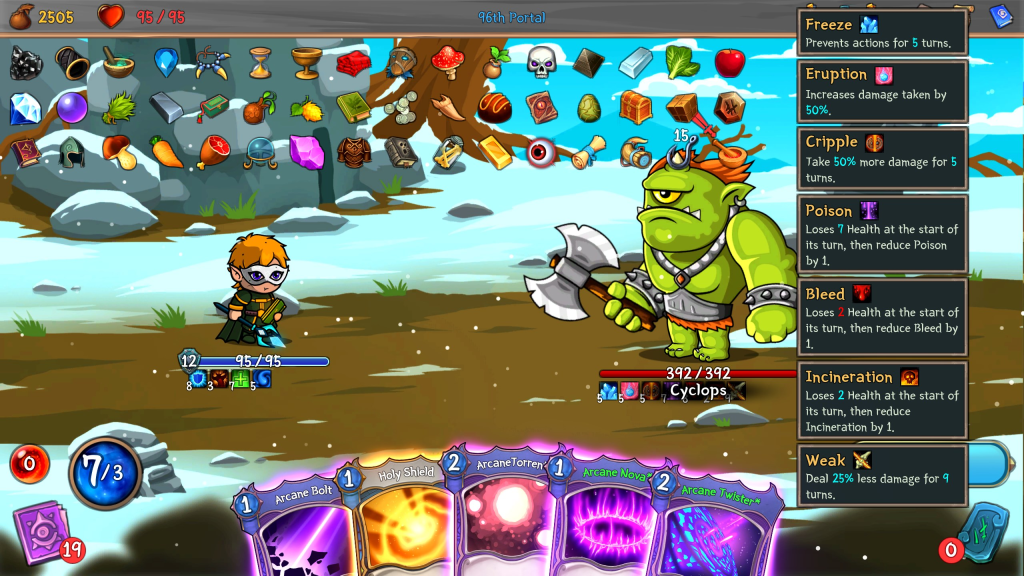
The boon-granting artifacts dramatically turned my fortunes, however. I fought two champions back to back. My first reward automatically slapped all future enemies with a ‘freeze’ status for the first two rounds of combat, preventing them from taking any actions whatsoever. My second reward did the same thing, but for three rounds of combat instead of two. Now, get this – they stacked. Every single fight from then on started with a free five uninterrupted rounds to do whatever I pleased without the enemy having any chance for reprisal. Even if the game could end, I had already won – fewer than 10 rooms in.
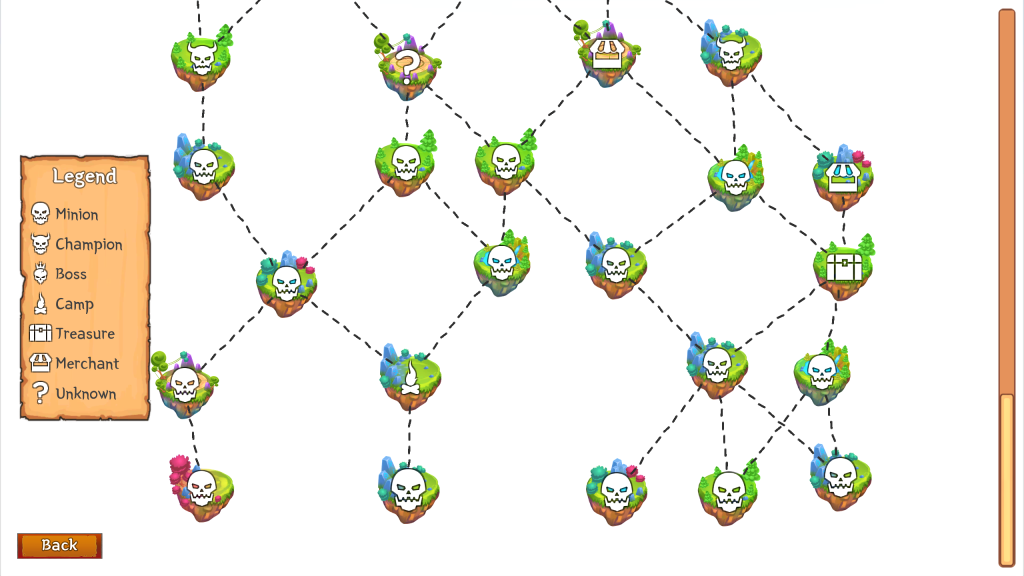
Sometimes the map screen would have background art. Often it… wouldn’t.
This got me thinking. While I was certainly steamrolling the game having done almost nothing of tactical merit to deserve it, this was a very different form of engagement than I was used to from the genre. The fun of these games usually comes from overcoming gradually mounting challenges, fine-tuning your deck to draw more optimal hands. That said, I cannot deny that I was, for about 15 minutes, having a lot of fun I don’t normally see in this subgenre that strives for challenge. I would enter a room, immediately crush the enemy without them taking a single turn, then do it again and again. I was making money faster than I could spend it all buying every available artifact at every shop I came across. Inevitably, this became boring – but it’s a type of forbidden, beta-testing enjoyment that game designers usually try very hard to prevent you from encountering. Outside of tutorials or opening levels, this type of thing usually lays the game’s mechanics a little too bare or makes the gameplay seem too shallow. I can only judge Spellrune on what is currently available, but I think this type of experience would have been among the first things they’d have tried to eliminate. Well, besides the bugs. The game kept softlocking itself at victory reward screens. This is arguably the worst possible place to have your game stop functioning because it kills the player’s desire to continue stone dead – they have to redo the whole fight. That may have been more of an issue had any of the fights lasted longer than one turn, but you see what I’m getting at, hopefully.
Here in the 96th room, it looks like a lot is going on, but all it really means is that I can’t be touched, let alone lose.
After I’d picked up my 48th (forty-eighth!) artifact, the game stopped adding them to my collection, although it was happy for me to waste money by trying to buy more in shops. That was where I gave up. Now that adding cards was pointless, the reward system was stuck in a loop where the only thing it could give me was more money, yet the only things I could buy with it were no longer usable. All reasons to persevere were gone.
I guess when you’re rolling in this much money, it’s more of a charity donation.
Presentation
I must stress, the game isn’t finished, so it’s fair to think that had the developers had more time and the game was completed, we wouldn’t have issues like the game randomly softlocking after winning fights, or that telltale tangible Unity chug every time the enemy passes turn to you. The stage selection map has no background whatsoever, which is very jarring. Every time you complete a room, your character steps through a portal to the next stage, which takes several seconds and cannot be skipped. All this aside, there’s a nice Monster Slayers-esque design sensibility to the enemies; positively Newgroundish in their colouring and simple bobbing animations. The music is serviceable. The sound effects are fine. The problem with such faint praise is that it seems all the more damning after such a laundry list of criticisms, but given its strong similarity to certain other games, a unique presentation would have really gone a long way to keeping the game memorable, even if it never got completed.
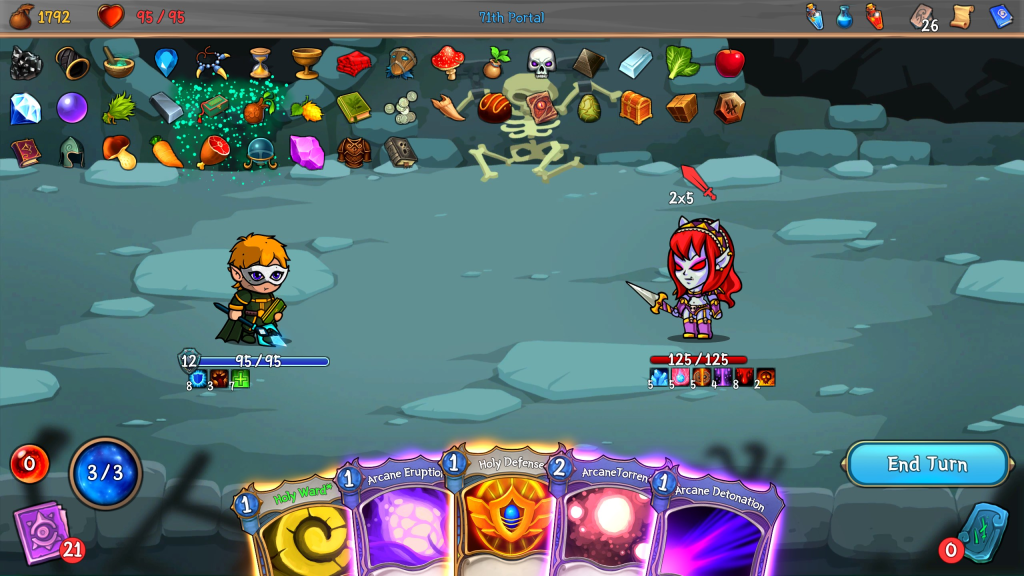
The relic icons are pretty and clear, though they do draw my eye to the oddly stretched background skeleton. Also: 71th Portal.
Closing Remarks
Unfortunately, I cannot think of a reason (other than this very project) to play Spellrune in 2024. I never want to believe a developer is acting in bad faith, because I cannot imagine that even a rushed, heavily derivative game is worth the time, energy, or lost goodwill from customers just because a certain genre is currently in vogue. These days, Microlith Games’ website redirects to something completely unrelated. I hope one day I’ll have a chance to contact them about what exactly the goal was and what happened. On the other hand, I can confidently say that this is the first and only game I’ve covered here that I never won or lost a run on!
Standout Cards
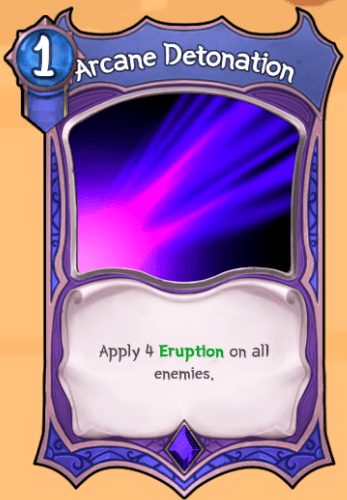
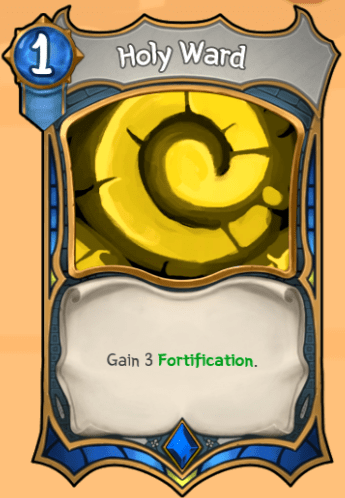
Each stack of Eruption adds an additional 10% damage when enemies are attacked. Broken.
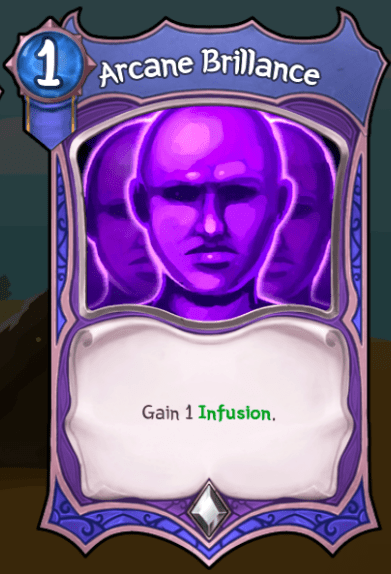
It says something when I was struggling to come up with 3 cards that felt noteworthy. I really like this one’s art. Moai vibes.
Fortification gives you +4 Defense (think built-in block) at the end of your turn, but then loses a stack. Never ended up needing it, but sounds incredibly strong.
Only a handful of titles in and an identity emerges for the Playdate as a system home to indie concepts that may not have strong enough legs to get noticed in a world as thick and fast as the world of PC games, but are unusual enough to take advantage of a good hardware gimmick. Without wanting to be reductive, I’d liken them to being particularly beefy WarioWare microgames. Here’s one that sounds like two particularly unlikely pulls from a hat filled with game mechanics: a visual novel with tilt controls.
The annual Festi-Ball is approaching for Pomegranate Village, and you, Prota, take your dog Minty over to Prof Marbel’s lab to help out. Hijinks ensue and the prof’s invention for the festival scrambles Prota’s brain, which leads to Minty going missing. What follows is an hour-ish of dialogue with the colourful cast that populate the village as you try to track down the dog, minus your usual mental faculties.
The primary engagement – and humour – comes from giving responses to NPCs via marble mazes. A marble is dropped into a maze (ostensibly Prota’s confused mind) and you must guide it to one of several possible goals that leads to what she says or suggests next. The entire maze is tilted with the crank, as opposed to controlling the ball directly (this feels like a 2D Super Monkey Ball). For example, on my first playthrough, I ended up making a pretty good missing-dog poster, which Prota suggested be printed on thick card stock with a great image of Minty, thanks to some careful marble guidance. However, later on, when ordering a sandwich that might lure Minty as bait, the harder maze led me to make one with protein powder and cactus toppings. The marble itself has a very good amount of inertia to it, but certain mazes are quite difficult to manipulate or get your bearings in. I imagine this can lead to frustration if you’re gunning for a certain outcome or all the endings, but for the first couple of playthroughs, getting these unintended consequences usually leads to a good chuckle.
Like Casual Birder, Lost Your Marbles combines two extremely different concepts that actually do well together for their short runtime. You probably wouldn’t want peanut butter and ice cream for every dessert, but it turns out it can be surprisingly nice in small doses. As such, many of LYM’s best moments are ones that make you laugh out loud. Because it’s short enough to blast through in under an hour, it’s easy to do different types of playthrough: are you going to do a run where you try to whip up the worst missing dog poster possible for the laughs, or are you going to try to take it slowly and go for the ‘best’ options you can? Patience will likely wear thin before you 100% it, but I’d say this is one of the best poster children for the Playdate I’ve yet to come across. Sounds weird and is weird, yet remains a novelty with a good amount of substance.
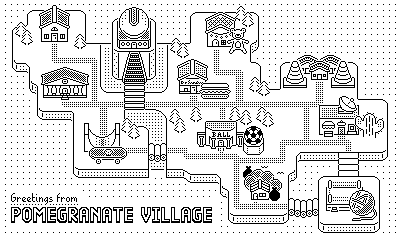
Asking the real questions.Prota’s expression and the NPCs are the big draws.Feels very Super Mario Land 2, this map.






 Shrunken Shrine